
Hiring Process Efficiency: A 2026 Guide for HR Teams

Hiring process efficiency is defined as an organization’s ability to fill roles quickly, at controlled cost, and with candidates who perform well after joining. The industry term for this concept is recruitment efficiency, and it covers every stage from job posting to signed offer. Inefficient hiring cycles over 40 days increase candidate drop-off by 12%. That single figure shows how delays do not just slow HR teams down. They actively cost organizations the candidates they worked hardest to attract. Understanding what is hiring process efficiency, and how to measure it, is the starting point for fixing it.
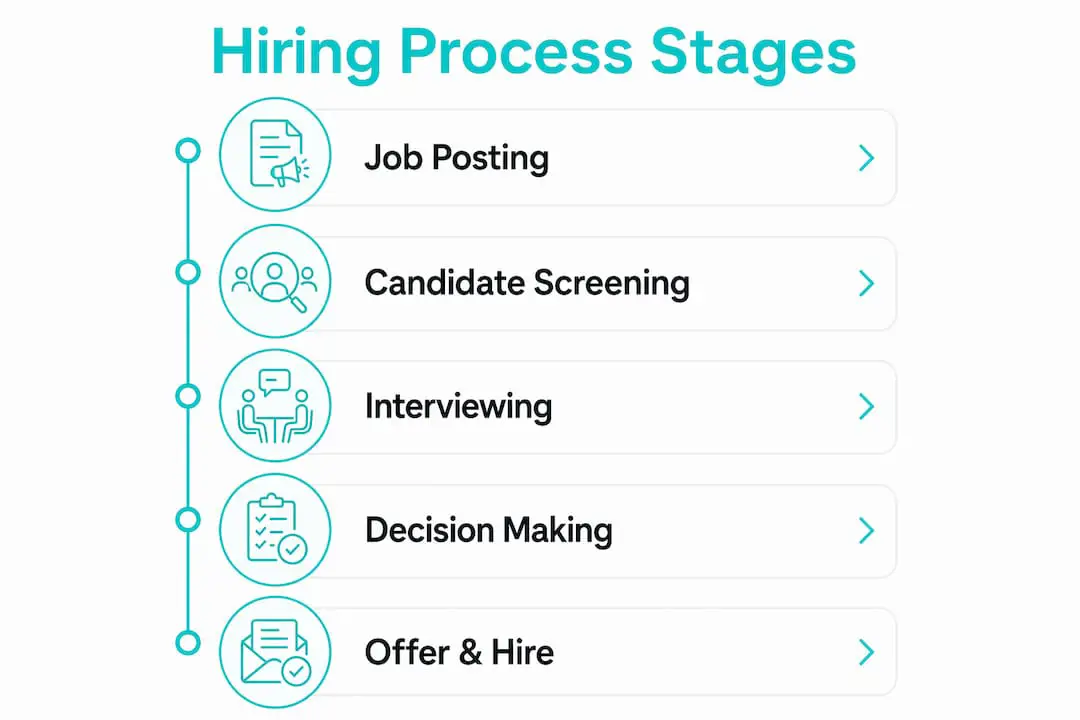
What is hiring process efficiency, and why does it matter?
Hiring process efficiency is the strategic balance of speed, cost, and quality across your recruitment cycle. IBM defines recruitment efficiency not as speeding up existing tasks but as reducing wasted effort and improving the quality of hiring decisions. That distinction matters. A team that screens 500 résumés manually and hires the wrong person has moved fast and achieved nothing.
The business case for improving recruitment efficiency is direct. Slow hiring raises cost-per-hire, burns recruiter capacity, and signals disorganization to candidates who have other offers. Typical hiring processes take 4–8 weeks, and every unnecessary week in that window increases the risk of losing your top candidate to a faster competitor. HR leaders who treat efficiency as a core operational metric, not a secondary concern, consistently outperform those who do not.

What metrics are used to measure hiring effectiveness?
Measuring hiring effectiveness requires tracking both speed metrics and outcome metrics. Speed metrics tell you how fast the process moves. Outcome metrics tell you whether the process produced good results. The most effective teams track both together.
| Metric | Definition | Why it matters |
|---|---|---|
| Time-to-hire | Days from job posting to accepted offer | Measures full cycle speed and candidate experience |
| Time-to-fill | Days from requisition open to role filled | Tracks operational capacity and planning accuracy |
| Time-to-decision | Days from final interview to offer sent | Isolates internal decision delays |
| Quality of hire | Performance rating of new hires at 90 days | Connects recruitment to business outcomes |
| Offer acceptance rate | Percentage of offers accepted | Signals candidate experience and compensation alignment |
| Cost-per-hire | Total recruiting spend divided by hires made | Tracks financial efficiency of the process |
Tracking outcome metrics like quality of hire and retention is more valuable than tracking activity metrics alone. Activity metrics count what recruiters do. Outcome metrics measure whether those actions produced hires who actually succeed in the role.
Pipeline conversion rates add another layer of insight. A conversion rate tracks the percentage of candidates who move from one stage to the next. If your application-to-screen rate is strong but your screen-to-interview rate is weak, the bottleneck is in your screening criteria, not your sourcing. That specificity is what makes conversion data so useful for practical skills evaluation and process design.
Pro Tip: Track time-to-decision separately from time-to-hire. A long time-to-decision almost always points to a hiring manager problem, not a recruiter problem. Fixing the right thing saves weeks.
How can automation and AI improve hiring process efficiency?
Automation reduces the manual work that slows every stage of the hiring funnel. Automated scheduling is 26% faster than manual coordination, and automating sourcing saves 5–10 hours per week per recruiter. Those hours compound quickly across a team managing multiple open roles.
The benefits of automation extend beyond speed. AI screening applies the same evaluation criteria to every candidate, removing the fatigue-driven inconsistency that affects human reviewers after the 30th résumé. Structured, consistent screening produces better signal earlier in the funnel, which means fewer wasted interviews and faster decisions. Automated hiring systems that combine AI sourcing, screening, outreach, and calibration double the rate of hitting hiring targets compared to manual processes.
Calibration is the step most teams skip. An AI system trained on generic data will surface generic candidates. A calibration phase, where the system receives explicit feedback on which past hires succeeded and why, dramatically improves match quality over time. Calibration phases where AI systems receive structured feedback improve accuracy in ways that generic out-of-the-box configurations cannot match.
AI should support human judgment, not replace it. The strongest hiring teams use AI to surface relevant signals and eliminate administrative noise, then apply human judgment at the decision points that actually matter: final interviews, offer construction, and onboarding design. AI used intentionally within structured processes surfaces better signals without removing the human accountability that quality hiring requires.
Pro Tip: Before deploying any AI screening tool, define your “ideal hire” profile with your hiring manager in writing. Without that calibration input, the system optimizes for the wrong signals from day one.
What are common bottlenecks that reduce hiring efficiency?
Most hiring delays trace back to a small number of repeating problems. Identifying them by name makes them fixable.
-
Misaligned role requirements. When recruiters and hiring managers disagree on what the role actually needs, sourcing cycles repeat. Alignment gaps on role requirements are the most common driver of expensive re-sourcing and wasted recruiter time.
-
Slow interview scheduling. Coordinating calendars manually between candidates and multiple interviewers adds days to every hiring cycle. Automated scheduling tools eliminate this delay entirely.
-
Delayed hiring manager feedback. When managers take more than 48 hours to provide interview feedback, candidates accept other offers. This is a process design failure, not a people failure. Build feedback deadlines into your workflow.
-
Too many interview rounds. Processes with four or more rounds signal indecision and frustrate strong candidates who have options. Three well-structured rounds with a clear decision framework produce better outcomes than five loosely defined ones.
-
Poor candidate communication. Candidates who receive no status updates after applying or interviewing drop out silently. Poor communication is one of the most avoidable causes of candidate drop-off, and it costs nothing to fix with automated status emails.
Each bottleneck compounds the others. A misaligned role brief leads to a longer shortlist, which requires more scheduling, which delays feedback, which loses candidates. Fixing the first bottleneck reduces pressure on every stage that follows.
How to improve hiring efficiency with structured practices
The most effective hiring process optimization starts before sourcing begins. Align your team on role requirements, must-have skills, and evaluation criteria before posting the job. Standardized scorecards enable faster, defensible decisions, especially under high volume, because every evaluator uses the same framework.
A candidate evaluation criteria checklist built before sourcing starts eliminates the ambiguity that causes re-sourcing cycles. It also makes debrief conversations faster because interviewers are comparing scores on the same dimensions, not sharing subjective impressions.
Structured interviews outperform unstructured ones on predictive validity. Use the same questions for every candidate in the same role. Score responses against defined criteria before discussing them as a group. This approach reduces bias and speeds the decision because the data is already organized when the debrief begins.
Continuous measurement closes the loop. Review your time-to-hire, offer acceptance rate, and 90-day quality of hire metrics monthly. When a metric moves in the wrong direction, trace it back to the specific stage where the problem originated. That discipline turns hiring from a reactive function into a managed process.
Pro Tip: Set a 48-hour feedback rule for every interviewer. Make it a calendar event, not a request. Teams that enforce this single rule cut their time-to-decision by days without changing anything else.
Key Takeaways
Hiring process efficiency is the balance of speed, cost, and decision quality. Teams that measure outcome metrics, fix specific bottlenecks, and calibrate their tools consistently outperform those that focus on activity volume alone.
| Point | Details |
|---|---|
| Define efficiency correctly | Recruitment efficiency means better decisions with less waste, not just faster activity. |
| Track outcome metrics | Quality of hire and offer acceptance rate connect hiring to real business results. |
| Fix bottlenecks by name | Misaligned role briefs, slow feedback, and poor communication cause most hiring delays. |
| Calibrate AI tools | AI screening improves only when trained with explicit feedback on your specific hiring goals. |
| Measure and iterate | Monthly metric reviews turn hiring into a managed process rather than a reactive one. |
The efficiency trap I see HR teams fall into repeatedly
Most HR teams I have worked with measure time-to-fill obsessively and quality of hire almost never. That imbalance is the root cause of most hiring inefficiency I have seen. Speed metrics are easy to pull from an applicant tracking system. Quality metrics require follow-up at 30, 60, and 90 days after hire. That extra step feels optional until a bad hire costs the organization six months of salary and a team’s morale.
The second pattern I see is teams deploying AI tools without a calibration phase. They turn on automated screening, accept the default settings, and wonder why the shortlists feel generic. AI is not a plug-and-play solution. It reflects the quality of the inputs you give it. A system trained on your best past hires, with explicit feedback on what made them successful, produces fundamentally different results than one running on factory defaults.
The hardest lesson is this: efficiency without quality is waste at speed. A team that fills roles in 14 days with candidates who leave in 90 days has not solved anything. The goal is a process that is fast enough to compete for top candidates and rigorous enough to produce hires who stay and perform. Those two things are not in conflict. They require the same discipline: clear criteria, structured evaluation, and consistent measurement.
— Jimmie
How Talent Approved supports faster, more accurate hiring
Talent Approved gives HR teams a direct way to reduce manual screening time without sacrificing decision quality. Its AI-powered skill assessments let you evaluate candidates on the exact capabilities a role requires, not on how well they wrote a résumé.
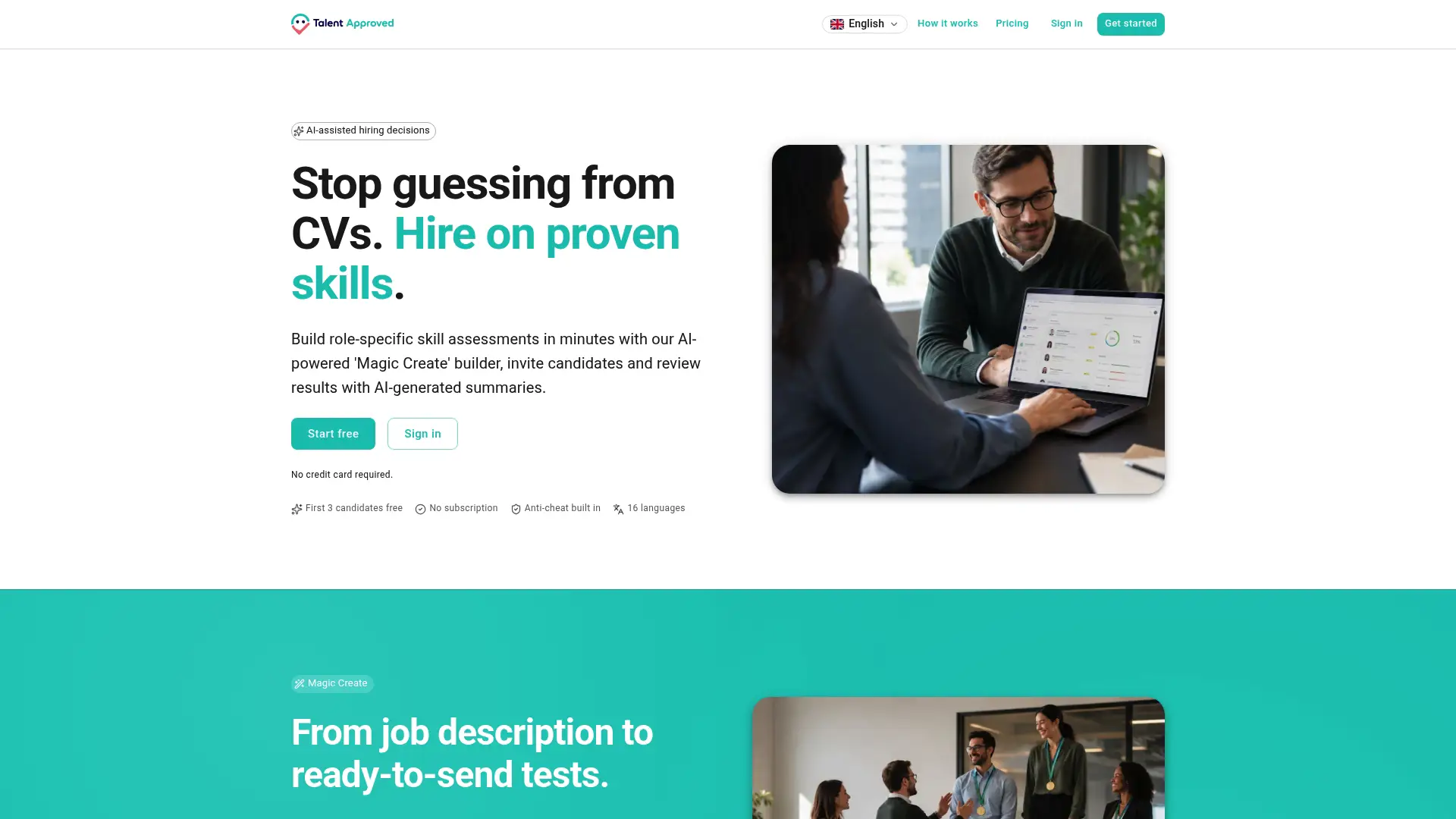
The Magic Create feature builds a tailored assessment in minutes from a job description or a list of required skills. Built-in anti-cheat mechanisms and AI candidate ranking surface your strongest candidates automatically, so your team spends interview time on the people most likely to succeed. You can create a skill test with AI today and have your first assessment running before your next intake meeting.
FAQ
What is the difference between time-to-hire and time-to-fill?
Time-to-hire measures the days from job posting to accepted offer. Time-to-fill measures from when the requisition opens to when the role is filled, making it a broader operational metric.
What is a good benchmark for time-to-hire?
Typical hiring processes take 4–8 weeks. Teams using structured workflows and applicant tracking systems consistently achieve results at the lower end of that range.
How does AI improve recruitment efficiency?
AI reduces manual screening time, applies consistent evaluation criteria, and surfaces stronger candidates earlier in the funnel. Automated systems that combine sourcing, screening, and calibration double the rate of hitting hiring targets compared to manual processes.
What is the most common cause of hiring delays?
Misalignment on role requirements is the most common bottleneck. When recruiters and hiring managers disagree on what the role needs, sourcing cycles repeat and costs multiply.
Why is quality of hire more important than speed metrics?
Quality of hire connects recruitment directly to business outcomes like performance and retention. Speed metrics measure activity. Quality metrics measure whether that activity produced results worth the investment.