
कैसे जॉब डिस्क्रिप्शन ऐसे असेसमेंट को आकार देते हैं जो वास्तव में प्रदर्शन की भविष्यवाणी करते हैं

एक job description जो observable, competency-linked tasks के रूप में लिखी गई हो, वैध और defensible assessments डिज़ाइन करने के लिए सबसे महत्वपूर्ण input है। इस चरण को छोड़ दें, तो एक अच्छी तरह से बनाया गया test भी गलत चीज़ को मापता है। हर गंभीर methodology, चाहे वह federal job analysis (JTA) guidance हो या SME validation panels, यहीं से शुरू होती है: job description marketing copy नहीं है, यह पूरे assessment का blueprint है। यही वह तरीका है जिससे job description व्यवहार में assessments को drive करती है, और इसीलिए Talent Approved जैसे platforms अपने tools को job description fields को सीधे assessment templates में parse करने के आधार पर बनाते हैं।
इसे सही तरीके से करें, और तीन चीज़ें तुरंत होती हैं:
- Assessment formats वही match करते हैं जो role वास्तव में मांगती है, न कि वो जो किसी template में शामिल हो गया।
- Scoring rubrics के पास एक defensible anchor point होता है, न कि किसी hiring manager की gut feeling।
- Hire और no-hire के निर्णय scrutiny में टिके रहते हैं क्योंकि आप हर प्रश्न को किसी job task से trace कर सकते हैं।
मुख्य बातें
Competency-linked job descriptions यह निर्धारित करती हैं कि कौन से assessment methods, rubrics, और cut scores वास्तव में on-the-job performance की भविष्यवाणी करेंगे।
| बिंदु | विवरण |
|---|---|
| Job analysis पहले आती है | कोई भी assessment stage डिज़ाइन करने से पहले high performers के साथ JTA चलाएं। |
| Method को competency से match करें | Hands-on tasks के लिए work samples उपयोग करें, judgment calls के लिए structured interviews। |
| Rubrics को behavior से anchor करें | एक भी response score करने से पहले strong, mixed, और weak performance परिभाषित करें। |
| Defensibility के लिए document करें | Accommodation और legal review को support करने के लिए essential functions और version history track करें। |
| Talent Approved chain को operationalize करता है | Magic Create job description fields को ready-to-score templates में बदलता है, साथ ही SME sign-off बनाए रखता है। |
विषय सूची
- Assessments को Drive करने के लिए Job Descriptions में क्या होना चाहिए
- Job Analysis से Competency Mapping तक
- ऐसे Assessments डिज़ाइन करना जो Job Description का अनुसरण करें
- Scoring, Cut Scores, और Validity
- Monitoring, Fairness, और Legal Considerations
- JD Lines को Assessment Items में बदलने की व्यावहारिक Checklist
- एक Assessment Platform इस Chain को कैसे Operationalize करता है
- HR Teams पहले वास्तव में क्या गलत करती हैं
- Job Descriptions को Ready-to-Use Assessments में बदलें
- स्रोत
- FAQ
Assessments को Drive करने के लिए Job Descriptions में क्या होना चाहिए
अधिकतर job descriptions आवेदकों को आकर्षित करने के लिए लिखी जाती हैं, न कि testing को inform करने के लिए। यही disconnect है। Assessment के उद्देश्य के लिए बनाई गई एक job description को essential duties — जो सफलता या विफलता निर्धारित करती हैं — को उन incidental tasks से अलग करना होता है जो कभी-कभी आती हैं लेकिन role को define नहीं करतीं।
चार elements एक job description को assessment input के रूप में उपयोगी बनाते हैं:
- केवल essential functions। वह सूचीबद्ध करें जो व्यक्ति को सफल होने के लिए करना होगा, न कि वह सब कुछ जिसे वे छू सकते हैं।
- Day-One competencies। उन skills का नाम लें जो एक नए hire को तुरंत demonstrate करनी होंगी, प्रत्येक से एक measurable success indicator जोड़कर।
- Contextual constraints। उन tools, software, physical environment, या time pressure को नोट करें जो यह shape करते हैं कि task वास्तव में कैसे होता है।
- सरल, specific भाषा। "rockstar" या "self-starter" जैसी vague या prestige-coded phrasing हटाएं जिसे Harvard Business Review ने applicant fit और downstream evaluation accuracy दोनों के लिए हानिकारक बताया है।
Pro Tip: यदि आप किसी candidate को एक 20-मिनट के assessment में job description की कोई line demonstrate करते हुए नहीं देख सकते, तो वह line या तो बहुत vague है या essential नहीं है। उसे फिर से लिखें या हटा दें।
Job Analysis से Competency Mapping तक
Job description prose को testable बनाने के लिए एक वास्तविक Job Task Analysis की आवश्यकता है, अनुमान की नहीं। OPM की competency-based assessment guidance job analysis को mandatory पहला कदम मानती है, इससे पहले कि कोई एक भी test question लिखे।
यह प्रक्रिया व्यवहार में इस प्रकार दिखती है:
- Role में वर्तमान में काम करने वाले दो या तीन high performers का interview करें और उन्हें एक typical week के बारे में बताने के लिए कहें।
- उनसे यह जानने के लिए shadow करें या survey करें कि कौन से tasks सबसे अधिक समय लेते हैं और कौन सी गलतियां होने पर सबसे अधिक नुकसान करती हैं।
- प्रत्येक recurring task को एक behavioral indicator वाली competency में translate करें (न कि "communication skills," बल्कि "एक non-technical client को बिना jargon के technical delay समझाता है")।
- Tasks को criticality, frequency, और failure के consequence के आधार पर rank करें, फिर तय करें कि कौन से एक dedicated assessment stage के योग्य हैं।
- हर task-to-competency link को एक single spec sheet में document करें जिसे assessment designers सीधे reference करें, ताकि बाद में किसी को logic दोबारा derive न करना पड़े।
इस कदम को छोड़ना ही वह तरीका है जिससे companies उस role के लिए Excel formulas test करने लगती हैं जिसमें मुख्य रूप से client diplomacy की आवश्यकता होती है।
ऐसे Assessments डिज़ाइन करना जो Job Description का अनुसरण करें
एक बार competencies map हो जाने के बाद, method का चुनाव job description के बाद आना चाहिए, पहले नहीं। एक work sample hands-on, tool-specific tasks के लिए उपयुक्त है। एक structured interview interpersonal judgment और ambiguity में decision-making के लिए उपयुक्त है। एक situational judgment test (SJT) उन roles के लिए उपयुक्त है जहां सही उत्तर केवल skill पर नहीं, बल्कि constraints पर निर्भर करता है।
HHS की hiring assessment strategies पर guidance इन्हें एक multi-hurdle structure में sequence करने की सिफारिश करती है ताकि candidate का burden केवल तभी बढ़े जब stakes बढ़ें। एक typical flow:
- Screening quiz या short applied task — volume filter करता है, per candidate कम लागत।
- Work sample या simulation — job task analysis में पहचानी गई core technical competency को test करता है।
- Structured interview — judgment, communication, और उन edge cases की जांच करता है जिन्हें simulation capture नहीं कर सका।
- Final panel या reference check — केवल highest-stakes hires के लिए fit confirm करता है।
Job description में कितना detail है यह निर्धारित करता है कि दूसरे stage में 45-minute simulation की ज़रूरत है या 10-minute applied task की। एक vague job description vague hurdles पैदा करती है। एक precise job description आपको यह calibrate करने देती है कि प्रत्येक stage में कितना friction जोड़ा जाए, जो process को fair रखती है बिना किसी का afternoon बर्बाद किए।
Scoring, Cut Scores, और Validity
Job description evidence को hiring decision में बदलने के लिए एक rubric की ज़रूरत होती है जो actual behavior से anchored हो, vibes से नहीं। OPM की guidance नोट करती है कि precise behavioral anchors — strong, mixed, weak — जो directly Day-One competencies से जुड़े हों, scoring को बहुत कम subjective बनाते हैं और आपको कुछ ऐसा देते हैं जिसपर आप point कर सकें जब किसी decision को challenge किया जाए।
Cut scores तब सबसे अच्छा काम करते हैं जब वे criterion-referenced हों: passing bar को किसी arbitrary percentage से नहीं, बल्कि role में current employees के performance data का उपयोग करके set करें।
- Define करें कि प्रत्येक competency के लिए "strong," "mixed," और "weak" performance कैसी दिखती है, इससे पहले कि कोई एक भी response score करे।
- Cut scores को एक baseline के विरुद्ध set करें — चाहे post-hire performance data हो या high performers का criterion panel।
- Inter-rater reliability को नियमित रूप से track करें; यदि दो raters एक ही response को तीन points अलग score करते हैं, तो आपके rubric को tighter anchors की ज़रूरत है।
- एक validity file रखें जो document करे कि प्रत्येक assessment job description से कैसे map करता है, यदि कभी decision पर प्रश्न उठाया जाए।
एक outcome-first design approach — 90-day performance target से पीछे की ओर काम करते हुए — उन assessments की तुलना में stronger predictive validity वाले assessments produce करती है जो एक generic skills checklist से बनाए गए हों।
Monitoring, Fairness, और Legal Considerations
एक job description जो clearly essential functions बताती है, वह केवल test design को guide करने से अधिक करती है। यह आपका primary defense भी है जब कोई assessment decision legal scrutiny का सामना करता है। EEOC की enforcement guidance स्पष्ट है कि pre-employment tests job-related और validated होने चाहिए, और essential functions का documentation directly accommodation decisions को support करता है।
चार practices process को defensible रखती हैं:
- हर assessment stage पर adverse impact analyses चलाएं, न कि केवल final interview पर, और weighting adjust करें यदि कोई एक group असमान रूप से screen out हो रहा हो।
- Essential functions को इतनी clearly document करें कि एक accommodation request के पास measure करने के लिए कुछ concrete हो।
- हर job description और rubric update को version-control करें, ताकि आप दिखा सकें कि जब किसी given candidate का evaluation हुआ था तब क्या लागू था।
- Assessment outcomes की quarterly review करें, न केवल launch पर, क्योंकि roles और tools अधिकतर companies द्वारा अपनी job descriptions update करने की तुलना में तेज़ी से बदलते हैं।
JD Lines को Assessment Items में बदलने की व्यावहारिक Checklist
एक job description को working assessment criteria में बदलने के लिए committee की ज़रूरत नहीं है। इसके लिए तीन प्रश्नों को क्रम में पूछने की ज़रूरत है:
- Task क्या है? Job description से exact line निकालें (जैसे, "reconciles vendor invoices against purchase orders weekly")।
- Observable evidence क्या है? तय करें कि एक candidate यह prove करने के लिए क्या actually produce करेगा या कहेगा कि वे यह कर सकते हैं (एक corrected reconciliation sheet, उनकी error-checking process का walkthrough)।
- Method और level क्या है? Work sample, structured interview, या SJT चुनें, और scoring शुरू होने से पहले इसे "must-have" या "nice-to-have" mark करें।
Pro Tip: Pass/fail gate तब लिखें जब किसी भी candidate का response देखने से पहले हों। "हम इसे देखकर पहचान लेंगे" mid-review में तय करना ही वह तरीका है जिससे bias वापस आ जाता है।
Acceptable evidence threshold को screening test design में ही document करें, न कि एक अलग memo में जिसे बाद में कोई नहीं पढ़ता।
एक Assessment Platform इस Chain को कैसे Operationalize करता है
Intake to scorecard to screen-criteria workflow तब सबसे अच्छा काम करता है जब एक platform draft generate करे और एक human अभी भी sign off करे। Unsupervised AI intake ऐसे credentials invent कर सकता है जो actual job description में कभी थे ही नहीं, इसीलिए एक structured intake pattern technology जितना ही महत्वपूर्ण है।
Talent Approved का Magic Create feature job description fields से directly एक tailored assessment template बनाता है, जबकि anti-cheat monitoring और AI-generated summaries SME का final call हटाए बिना review time कम करते हैं। Versioning और documented sign-off पूरी chain को auditable रखते हैं।
HR Teams पहले वास्तव में क्या गलत करती हैं
अधिकतर rollouts over-specification से fail होते हैं, under-specification से नहीं। Teams job description की हर line assess करने की कोशिश करती हैं, बजाय उन तीन या चार tasks के जो actually success predict करती हैं। एक role को pilot करें, 90-day outcome measure करें, और subject matter experts को — न कि किसी template को — यह approve करने दें कि must-have क्या है।
Job Descriptions को Ready-to-Use Assessments में बदलें
Talent Approved job description लिखने और validated assessment चलाने के बीच की दूरी को हफ्तों के बजाय मिनटों में कम कर देता है। अपनी job description या skills की एक list paste करें, और Magic Create built-in scoring के साथ एक role-specific test generate करता है, ताकि आपको हर बार requisition खोलने पर blank page से rubric design शुरू न करनी पड़े।
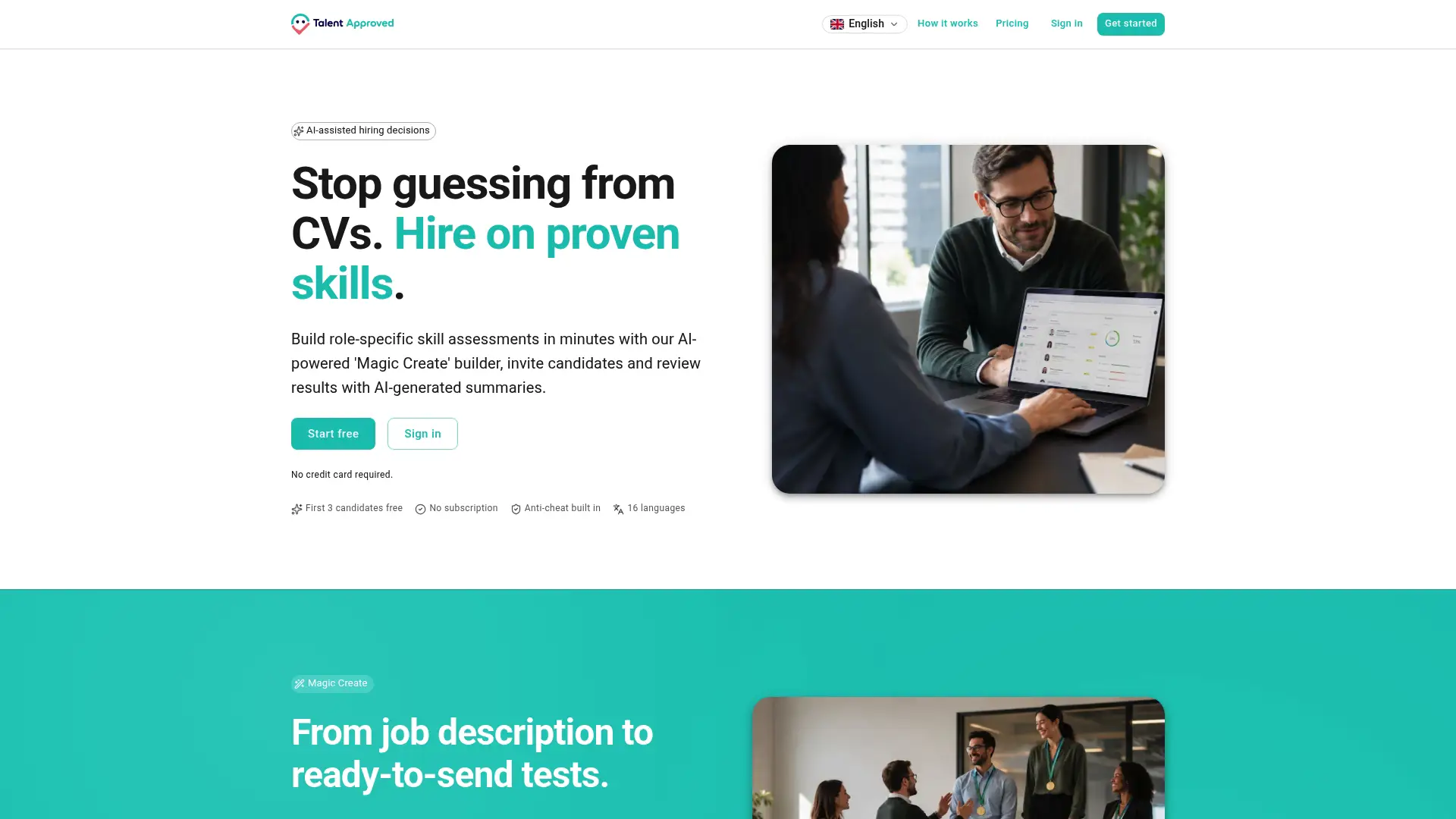
Anti-cheat monitoring, session replays, और AI-generated candidate summaries review का बोझ संभालते हैं, जबकि pay-as-you-go model का अर्थ है कि आप केवल उस candidate के लिए $5 pay करते हैं जो actually test complete करता है — न कि hiring pushes के बीच idle बैठे tool के लिए flat subscription। यह structure उन HR teams के लिए उतना ही fit है जो एक quarter में एक role run करती हैं, जितना कि उस recruiter के लिए जो एक single opening के लिए दो सौ applicants screen कर रहा है।
यदि आपकी अगली requisition किसी draft folder में पड़ी है, तो वह job description पहले से ही वह अधिकतर कुछ है जिसकी Magic Create को ज़रूरत है। एक template generate करने के लिए Talent Approved homepage पर जाएं और देखें कि यह कौन सा scorecard बनाता है, इससे पहले कि आप किसी भी चीज़ के लिए commit करें।
स्रोत
- OPM — Designing a competency-based assessment strategy
- HHS — Hiring assessment strategies
- EEOC — Enforcement guidance on disability-related inquiries and medical examinations
- Harvard Business Review — How to write a job description that gets people to apply
FAQ
क्या आप assessment fail करके भी job पा सकते हैं?
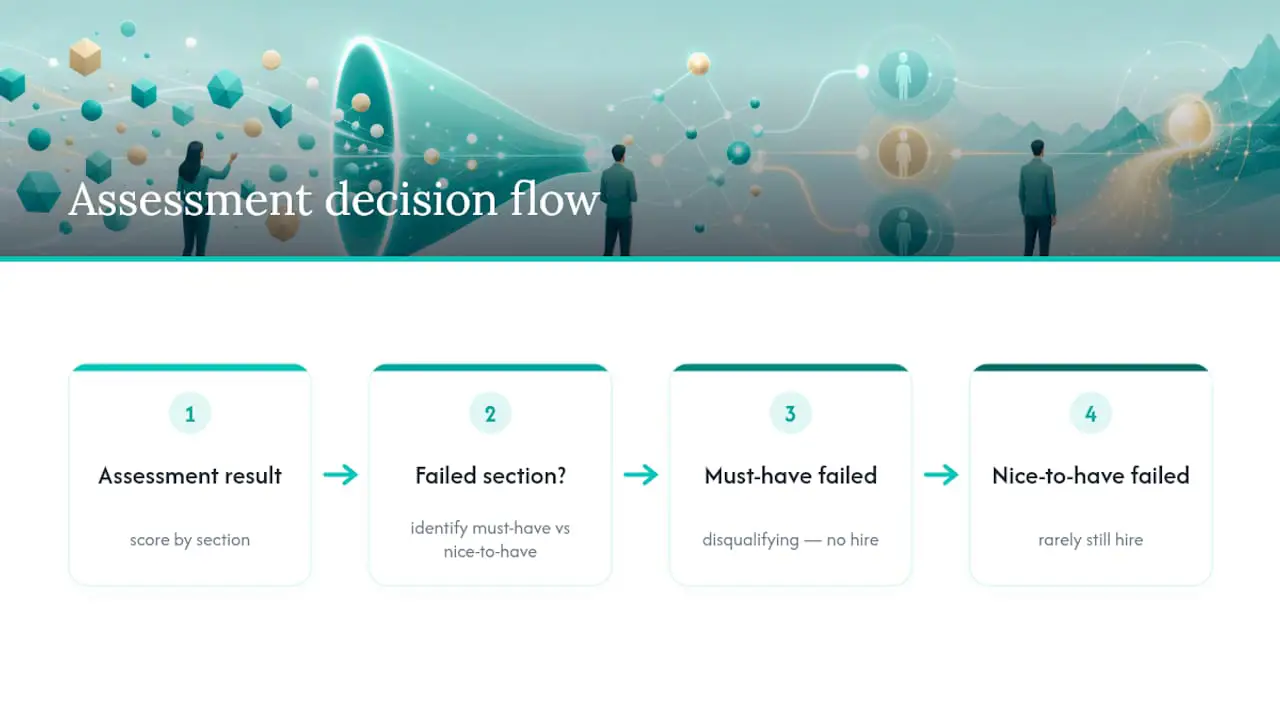
शायद ही कभी, और केवल तब जब fail हुए section को "must-have" gate के बजाय "nice-to-have" mark किया गया था जो किसी essential function से जुड़ा हो; अधिकतर well-designed assessments core competency failures को disqualifying मानते हैं।
Hiring में job descriptions का उद्देश्य क्या है?
Applicants को आकर्षित करने से परे, एक job description essential functions और performance criteria define करती है जिन्हें assessments, interviews, और accommodation decisions सभी reference करते हैं।
Companies hiring के समय assessments क्यों उपयोग करती हैं?
Assessments employers को यह verify करने देते हैं कि कोई candidate job description में दिए गए tasks actually perform कर सकता है, बजाय résumé claims पर निर्भर रहने के, जो predictive validity सुधारता है और mismatched hires कम करता है।
Assessment specialist क्या करता है?
एक assessment specialist job task analysis चलाता है, competencies को methods से map करता है, scoring rubrics बनाता है, और validate करता है कि test results actual job performance से correlate करते हैं — ऐसा काम जिसे Talent Approved जैसे platforms Magic Create के माध्यम से partially automate करते हैं, साथ ही review loop में एक human को बनाए रखते हैं।
Assessments को valid रखने के लिए job descriptions को कितनी बार update करना चाहिए?
उन्हें कम से कम annually review करें, या जल्दी यदि tools, tasks, या reporting structures बदलें, क्योंकि एक outdated job description चुपचाप उस link को तोड़ देती है जो test की गई चीज़ और role की वर्तमान ज़रूरत के बीच है।