
How to Transition to CV-Free Hiring Step by Step

The fastest, lowest-risk route to CV-free hiring is a phased rollout: define role outcomes, build validated skills assessments, pilot on one or two roles, then scale once the data holds up. You don’t need to overhaul your entire recruiting function overnight. You need a sequence.
Here’s what that sequence looks like in practice:
- Define outcomes first. Before you touch a single assessment tool, agree on what a top performer actually does in the role, month one and month twelve.
- Design before you buy. Build the skills matrix and scoring rubric before selecting a platform, so the tool serves the process instead of dictating it.
- Pilot small. Run the new process on one or two open roles, not your entire hiring plan, and collect real numbers before scaling.
- Verify, don’t assume. Check assessment scores against actual on-the-job performance once your first pilot hires have been in seat for 60 to 90 days.
Success on that pilot shows up two ways: your qualified applicant pool gets measurably broader (more candidates from nontraditional backgrounds clearing the bar), and your hiring managers report the assessment scores actually predicted who performed well. Research from the Behavioural Insights Team shows that standardized, structured assessment tasks level the playing field for candidates who never had access to elite credentials in the first place. Employer sentiment already backs the shift: 72% of employers now say they favor skill assessments over CVs, and roughly two thirds have adopted some form of skills-based screening. Platforms like Talent Approved exist specifically to make that pilot fast to build and easy to score, but the sequence below works whether you’re using software or a spreadsheet.
Table of Contents
- Readiness Checks Before You Flip the Switch
- Step 1: Define Role Outcomes and Core Skills
- Step 2: Build a Skills Library and Weight What Matters
- Step 3: Design Assessments, Rubrics, and Integrity Safeguards
- Step 4: Pilot and Validate Before You Scale
- Step 5: Rewrite Job Postings and Sourcing for a Skills-First Process
- Step 6: Choose Tools and Set Vendor-Selection Criteria
- Step 7: Train Assessors and Launch the New Workflow
- Step 8: Measure, Iterate, and Align Onboarding to Skill Gaps
- Common Implementation Pitfalls and Quick Fixes
- Why Talent Approved Recommends a Phased, Evidence-Based Rollout
- How Talent Approved Supports Your CV-Free Rollout
- Key Takeaways for Busy Hiring Managers
- Sources
- FAQ
Readiness Checks Before You Flip the Switch
Most failed CV-free rollouts don’t fail because the assessments were bad. They fail because nobody checked whether the organization was ready to run them. You need leadership buy-in, a named data owner, at least a rough skills taxonomy for your highest-volume role, and a budget line for assessment design or licensing.
Ask yourself these questions before you announce anything to hiring managers:
- Do you have at least one role fully profiled with outcomes and core skills, not just a job description?
- Is there a single person accountable for tracking pilot data and reporting results?
- Has legal or HR compliance signed off on your assessment approach under EEOC-aligned testing standards?
- Do you have a plan for storing assessment records and candidate data with a clear audit trail?
That last point matters more than most teams expect. Every assessment you administer becomes a hiring record. You need documented rubrics, timestamped scores, and a retention policy that satisfies both privacy law and EEO recordkeeping expectations. Build this before your first candidate takes a test, not after an audit request lands on your desk.
Step 1: Define Role Outcomes and Core Skills
Job analysis is the unglamorous work that makes everything downstream possible. Skip it, and you’ll build assessments that measure the wrong thing. The HRDegree skills-based hiring guide puts it plainly: rigorous job analysis and a competency model come before assessment design, not after.
Start with outcomes, not tasks. What does a top performer in this role actually deliver in their first week, their first quarter, and their first year? A customer support lead’s year-one outcome might be reducing average resolution time by a specific margin. A financial analyst’s might be building a forecasting model that survives an audit. Outcomes give you something concrete to test for.
From there, split the skill list into two tiers:
- Core skills are the ones a candidate cannot succeed without. For a data analyst role, that might mean writing a working SQL query under time pressure.
- Great-to-have skills add value but aren’t disqualifying. Familiarity with a specific visualization tool often falls here.
Use non-degree proxies wherever possible. Instead of “bachelor’s degree in marketing,” describe “has run at least one paid social campaign with a measurable outcome.” That phrasing opens the door to self-taught candidates and career changers alike.
Three questions guide a productive job-analysis conversation with hiring managers:
- What does someone who’s failing in this role look like in their first 90 days?
- Which of today’s tasks would you trust an untrained new hire to do on day one?
- If you could only test for three things, what would they be?
Resources like O*Net, Education Design Lab’s skills frameworks, and the Apprenticeship offer standardized skill naming conventions, so you’re not inventing terminology from scratch for every role.
Pro Tip: Interview your three best current performers separately and ask each one what they actually do all day. The overlap between their answers is usually your true core-skill list, and it rarely matches the original job description.
Step 2: Build a Skills Library and Weight What Matters
A skills library is a living reference document, not a one-off exercise. Without one, every hiring manager defines “communication skills” differently, and your assessments end up inconsistent from role to role. The Apprenticeship.gov Starter Kit treats this step as foundational to everything that follows.
Group skills into three buckets: technical (can they use the tool or method), functional (can they apply judgment to a real scenario), and behavioral (how do they operate under pressure or with a team). A software engineer’s technical skill might be debugging legacy code; their functional skill might be prioritizing a backlog; their behavioral skill might be how they handle a disagreement in code review.
A simple skills matrix keeps this organized:
| — | — | — | — | — | | SQL query writing | Technical | Core | 30% | Writes a working query in under 15 minutes | | Stakeholder communication | Behavioral | Core | 72% | Explains a technical finding to a non-technical panelist clearly | | Data visualization tool fluency | Technical | Great-to-have | two thirds | Builds a basic chart from a sample dataset | | Project prioritization | Functional | Core | 20% | Ranks three competing requests with sound reasoning | | Industry-specific reporting familiarity | Functional | Great-to-have | 15% | Recognizes standard report formats |
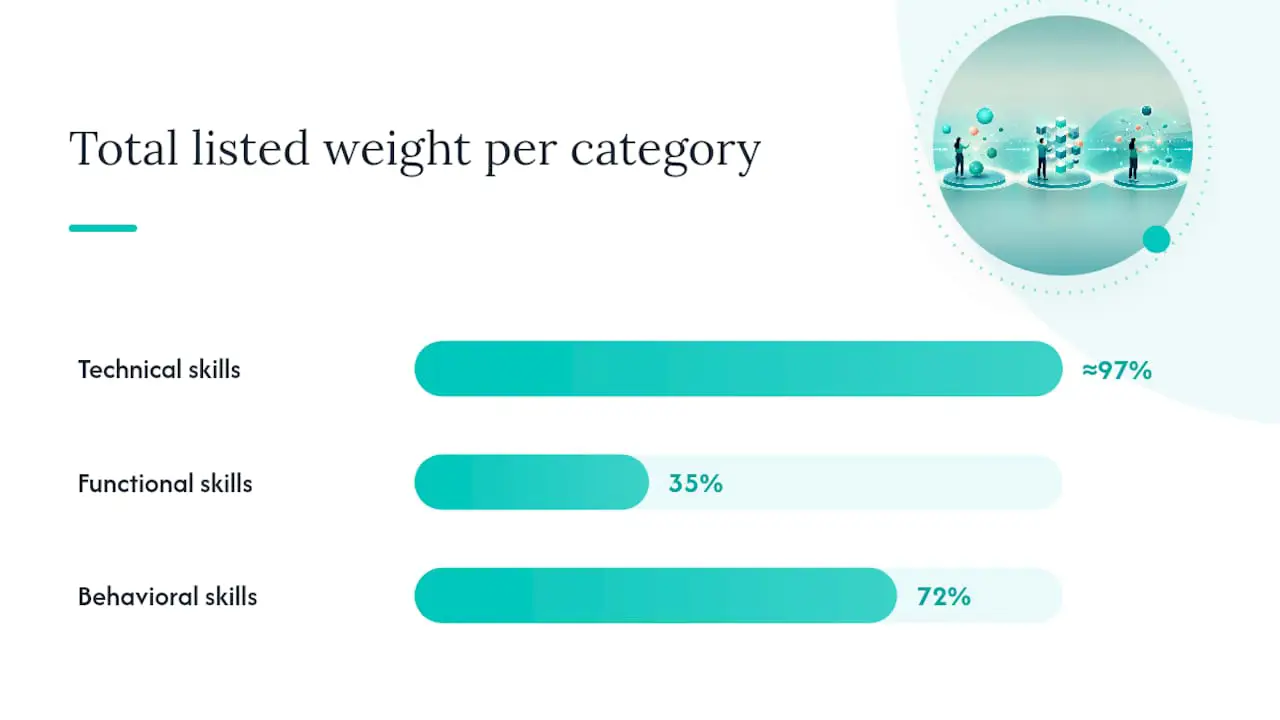
Map those weights directly into your scoring rubric so a candidate can’t compensate for a missing core skill with unrelated strengths.
Step 3: Design Assessments, Rubrics, and Integrity Safeguards
The assessment type should match what you’re actually trying to measure. A work sample tests execution. A situational judgment test measures decision-making under ambiguity. A structured interview, scored against a fixed rubric, tests communication and reasoning consistently across candidates. Combining two or three of these methods produces more reliable evidence than any single method alone, a point the HRDegree guide backs with research showing work samples and structured interviews outperform unstructured interviews in predictive validity.
Build your rubric before you write the assessment. A workable structure looks like this:
- Define 3-5 scoring criteria tied directly to your core skills list.
- Set score bands (say, 1 to 4) with a written anchor example for each band.
- Have two reviewers independently score a sample response before launch to catch ambiguity in the rubric itself.
- Document which criteria are weighted higher, matching the weights from your skills matrix.
Every assessment needs guardrails for fairness and integrity:
- Instructions written in plain language, tested with someone outside HR to catch confusing phrasing.
- A stated time allowance, with documented accommodation options for candidates who need more.
- Anti-cheat measures like screen monitoring, webcam checks, or session replay for remote assessments.
- A documented process for accessibility accommodations, filed and retrievable for audit purposes.
Pro Tip: *A minimum viable simulation beats a perfect one you never ship.
The Behavioural Insights Team’s research found that standardized skill-based assessment tasks reduce bias compared with interview-only screening, but only when the rubric is consistent across every candidate. A rubric applied loosely defeats the purpose.
Step 4: Pilot and Validate Before You Scale
Pick one or two roles, ideally ones with steady hiring volume, and run the full CV-free process end to end before rolling it out organization-wide. A workable pilot plan needs a defined scope (which roles, which locations), a sample size target (aim for at least 15 to 20 completed assessments per role to get usable signal), a timeline (six to eight weeks is typical), and a calibrated review panel.
During the pilot, track these data points:
- Assessment scores by candidate, broken out by rubric criterion.
- Aggregate demographic data on who applies, who passes, and who receives an offer (collected separately from the assessment itself, never used to score it).
- Time-to-hire compared with your CV-based baseline.
- Early performance proxies for anyone hired through the pilot, once they’re 60 to 90 days in.
Run a calibration exercise before scoring live candidates. Have every reviewer independently score the same three sample responses, then compare results as a group. If two reviewers land two points apart on a four-point scale, your rubric needs tighter anchor examples, not just more training.
Two fairness checks matter most here. First, an adverse impact analysis: are pass rates meaningfully different across demographic groups? Second, direct accessibility feedback from candidates who used accommodations. If disparities show up, don’t scrap the assessment. Isolate which criterion is driving the gap and revise that specific rubric item.
Step 5: Rewrite Job Postings and Sourcing for a Skills-First Process
Your job posting is often the first place candidates encounter your new process, and outdated language undoes everything you just built. A posting that still says “bachelor’s degree required” filters out exactly the candidates a skills-based process is designed to reach.
Compare the two approaches directly:
- Before: “Bachelor’s degree in computer science or related field required. 5+ years of professional experience.”
- After: “You’ll complete a 20-minute coding assessment and a structured interview focused on debugging and prioritization. No degree required; we care about what you can demonstrate.”
Broaden your sourcing channels to match the new language:
- Use skills-based keywords in job board listings instead of degree or years-of-experience gates.
- Recognize microcredentials, bootcamp completions, and portfolio work as valid signals worth screening in.
- Post in community and industry-specific channels where nontraditional candidates already gather, not just traditional job boards.
Tell candidates exactly what to expect: what’s being assessed, how long it takes, and what accommodations are available. That transparency alone tends to improve completion rates, because candidates who understand the process trust it more.
Step 6: Choose Tools and Set Vendor-Selection Criteria
Once your process is designed, the right platform should execute it faster, not redesign it for you. Evaluate any assessment vendor against a consistent checklist: evidence that their assessments are validated and job-related, anti-cheat capabilities (screen and webcam monitoring, session replay), integration with your existing ATS or HRIS, reporting and analytics depth, accessibility features, and a pricing model you understand upfront.
Features worth prioritizing as you scale from a two-role pilot to organization-wide rollout:
- Reusable assessment templates, so you’re not rebuilding a rubric from scratch for every similar role.
- AI-assisted item creation that turns a job description into a draft assessment in minutes rather than days.
- Controls that protect candidate experience, like clear timing and instructions.
- Multi-language support if you’re hiring across regions.
Talent Approved’s Magic Create feature builds a tailored, role-specific assessment directly from a job description or skill list, which matters most in Step 2 and Step 6 when you’re trying to move from a skills matrix to a working test without weeks of manual authoring. Its anti-cheat tools and AI-generated summaries also cut review time for hiring managers evaluating dozens of candidates per role.
Pricing shape matters as much as features. A pay-per-completed-assessment model, where you pay only when a candidate finishes a test, tends to align better with pilot-stage hiring volume than a flat subscription, since you’re not paying for capacity you’re not using yet.
Pro Tip: Ask any vendor for validity evidence specific to your role type, not just general claims about bias reduction. A platform that can show rubric consistency across similar roles is worth more than one that only offers polished dashboards.
Step 7: Train Assessors and Launch the New Workflow
A rubric is only as good as the people scoring against it. Before launch, run calibration sessions where every reviewer scores identical sample responses and discusses discrepancies as a group. Pair that with structured interview practice and a short bias-awareness training focused on common scoring errors, like halo effect or anchoring on a candidate’s first answer.

Governance needs clear ownership from day one:
| Role | Responsibility |
|---|---|
| Hiring manager | Owns the job profile and outcome definitions |
| HR or People Ops lead | Signs off on assessment design and rubric before launch |
| Assessment reviewer(s) | Score candidates against the calibrated rubric |
| Analytics owner | Monitors pass rates, adverse impact, and pilot metrics |
Before go-live, confirm your candidate experience checklist is complete: clear timelines communicated upfront, prep materials so candidates know what to expect, a stated commitment to feedback (even a brief note on where they fell short), and documented accessibility options.
Decide where assessment artifacts live inside your ATS or HRIS before candidates start applying. Scores, rubrics, and session records need a consistent home with an audit trail, not a scattered mix of spreadsheets and email threads.
Step 8: Measure, Iterate, and Align Onboarding to Skill Gaps
Track a small set of KPIs rather than drowning in dashboards. The essentials: quality-of-hire proxies (early performance ratings, manager satisfaction at 90 days), time-to-fill, selection ratio (applicants to hires), adverse impact metrics by demographic group, cost-per-hire change versus your CV-based baseline, and early performance indicators tied back to specific assessment scores.
Assign an owner to each metric and review them monthly, not quarterly. Waiting a full quarter to catch a rubric problem means three months of candidates scored against a flawed instrument.
Close the loop by feeding pilot data back into onboarding. If most new hires show a consistent gap in one functional skill despite passing the assessment, that’s a signal to build a standard onboarding module addressing it, not necessarily to lower your bar. Over time, correlate assessment scores against actual performance reviews to confirm the tests are predicting what you think they’re predicting. If a criterion doesn’t correlate with performance after two or three hiring cycles, revise or retire it.
Common Implementation Pitfalls and Quick Fixes
Teams tend to make the same handful of mistakes when they move away from CVs. Each one has a fast fix if you catch it early.
- Rewriting job posts but not the process. Fix: audit your actual screening steps, not just the ad copy, before calling the transition complete.
- Skipping validation. Fix: commit to checking assessment scores against real performance data at the 90-day mark for every pilot hire.
- Relying on a single assessment type. Fix: pair at least one work sample with one structured interview for every role.
- Skipping calibration between reviewers. Fix: run a 30-minute calibration session before every hiring cycle, not just once at launch.
- Ignoring candidate experience. Fix: send a templated status update at every stage, even a short one, to keep completion rates high.
If your adverse impact analysis shows a persistent gap between demographic groups after two hiring cycles, bring in legal counsel or an industrial-organizational analytics specialist before making further changes. That’s not a step to handle informally.
Why Talent Approved Recommends a Phased, Evidence-Based Rollout
Talent Approved built its platform around one observation: teams that try to flip from CVs to skills-based hiring overnight almost always stall out, either from legal exposure they didn’t anticipate or from hiring managers who never trusted the new scores in the first place. A phased rollout, tested on one or two roles before it touches the whole organization, gives both problems time to surface and get fixed while the stakes are still low.
Two things make that phased approach workable at scale. Magic Create turns a job description into a role-specific assessment in minutes, which removes the biggest bottleneck teams hit in Step 2 and Step 3: building enough test content to run a real pilot. And the platform’s anti-cheat tools paired with AI-generated summaries mean a reviewer can score a stack of candidates in the time it used to take to screen a handful of resumes.
The organizations that get this right tend to see two outcomes: a broader, more diverse pool of qualified applicants, and hiring managers who stop second-guessing the data because it’s been calibrated and validated against real performance. That combination, backed by BCG’s research on pairing assessment quality with process change, is what separates a rollout that sticks from one that quietly reverts to resume screening within a year.
How Talent Approved Supports Your CV-Free Rollout
Talent Approved is built specifically for the phased rollout described in this guide, not a full-scale reimagining of your ATS on day one. Magic Create turns any job description or skill list into a tailored, structured assessment in minutes, so your Step 2 and Step 3 work happens in an afternoon instead of a sprint cycle.
Every assessment ships with built-in anti-cheat protection, including screen and webcam monitoring and full session replay, so your reviewers can trust the scores they’re looking at. AI-generated summaries condense each candidate’s performance into a quick, structured read, cutting review time for hiring managers juggling a full pipeline. Reusable templates and multi-language support mean your Step 6 vendor checklist gets easier to check off, not harder.
Talent Approved charges $5 per candidate who completes an assessment, with no subscription commitment, which fits naturally with a two-role pilot where you want to test the process before committing to volume pricing. If you’re ready to run the pilot described in Step 4, start building your first assessment with Talent Approved and see how quickly a job description turns into a scoring-ready test.
Key Takeaways for Busy Hiring Managers
A successful CV-free transition depends on sequencing outcomes before assessments, validating with a real pilot, and training reviewers before scaling organization-wide.
| Point | Details |
|---|---|
| Start with outcomes, not resumes | Define what a top performer delivers in year one before designing any test. |
| Pilot on one or two roles first | Collect 15 to 20 completed assessments per role before scaling further. |
| Combine assessment methods | Pair work samples with structured interviews for stronger predictive validity. |
| Calibrate reviewers before launch | Run a joint scoring session to catch rubric ambiguity early. |
| Choose a tool that fits the process | Talent Approved’s Magic Create and anti-cheat tools support rapid, validated pilots. |
Next step: pick your two highest-volume roles and start a pilot this quarter, not next year.
Sources
- How to use skill‑based assessment tasks (Behavioural Insights Team)
- Apprenticeship
- Competence over credentials: the rise of skills-based hiring (BCG)
- Skills-Based Hiring Guide for HR Professionals (HRDegree)
Talent Approved also maintains a library of templates and how-to articles covering assessment design, scoring rubrics, and candidate ranking for teams building out their own CV-free process.
FAQ
How Long Does a CV-Free Transition Typically Take?
A single-role pilot usually takes six to eight weeks from job analysis to first hire, with full organization-wide scaling happening over two to three additional hiring cycles once validation data looks solid.
Do I Need to Remove All Degree Requirements Immediately?
No. Start with one or two roles, rewrite those postings to focus on assessed skills, and expand once your pilot data shows the assessment reliably predicts performance.
What’s the Minimum Number of Assessment Methods I Should Use?
How Do I Know if My Assessment Is Fair?
Run an adverse impact analysis comparing pass rates across demographic groups, and gather direct accessibility feedback from candidates who used accommodations during the pilot.
Can a Platform Like Talent Approved Replace Manual Assessment Design?
Talent Approved’s Magic Create feature builds a role-specific assessment from a job description in minutes, which speeds up Step 2 and Step 3, but you still need to define outcomes and calibrate reviewers yourself.